Andy Beshear Was Right. We Need to Talk Like People We're Trying to Convince.
As a fine purveyor of “advocacy lingo,” I’m here to tell you something you’re probably not going to like.
Andy Beshear was right.
A bit over a week ago, Beshear joined a number of other prominent democrats at the Michigan Democratic Party convention, delivering a keynote address focused on his style of leadership in Kentucky, how he won election (and re-election) as an unapologetically pro-LGBTQ+ Democrat, and his take on how Democrats can win the Congress in 2026 and, God willing, the White House after that. It’s a very common kind of appearance for a young (for a Dem) elected official who is testing the waters on a run for higher office.
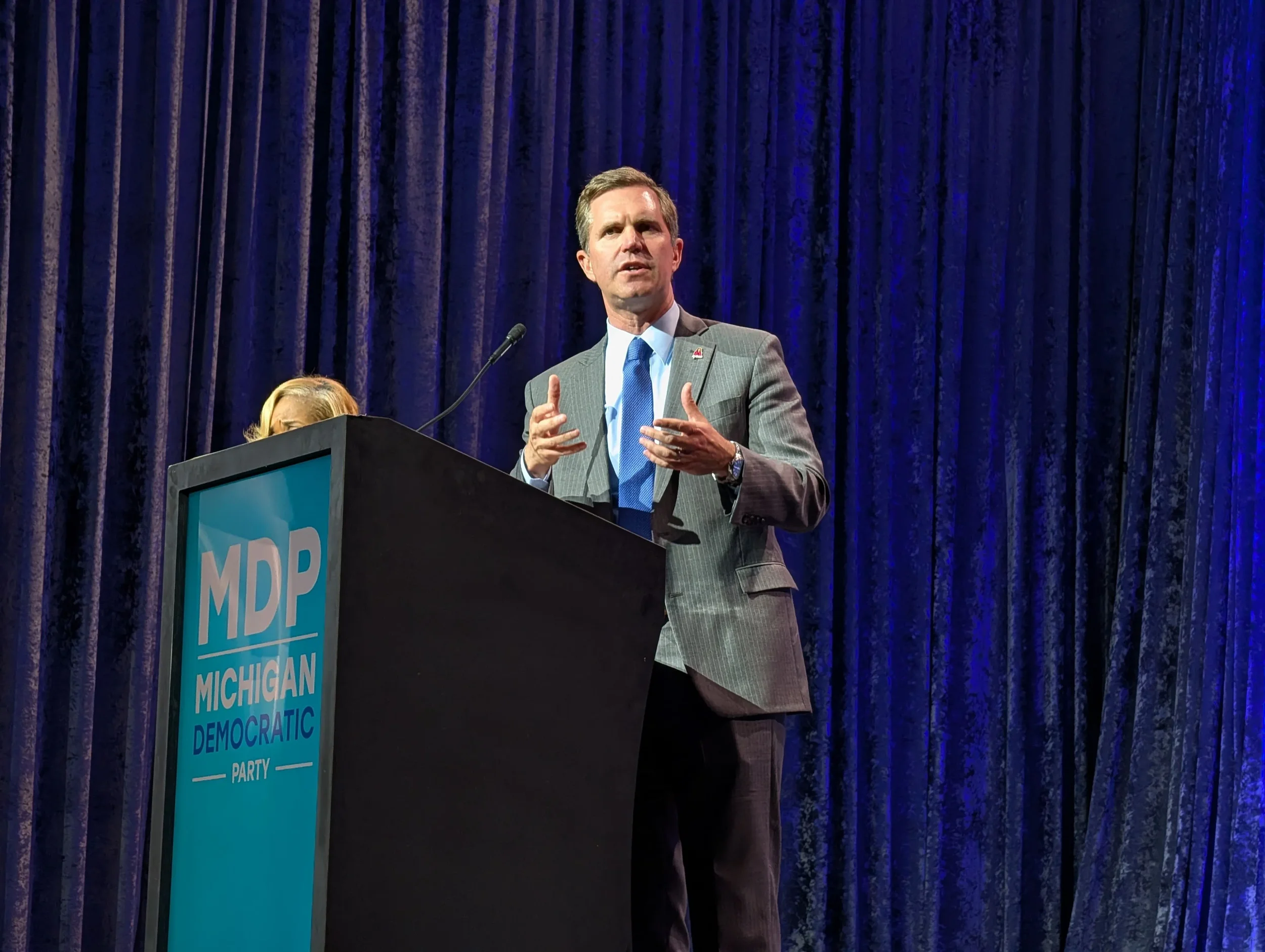
Photo Andrew Roth/Michigan Advance
According to the Michigan Advance, he described it as a change in style but not substance. “If we want to be the party of the people, we have got to talk like the people.”
This set off a lot of discussion on social media, especially Bluesky, where a lot of folks whose opinions I value seemed taken aback by this. I will admit some of the examples he used are a bit goofy - “justice-involved population” is definitely a term I haven’t heard outside of white papers, and “people experiencing homelessness” is definitely not something I hear outside of conferences and coalition meetings. But there are a lot more examples to think about, and some of them are much less obvious than the supposed shibboleths Beshear noted.
It’s natural for different groups of people to develop their own language. “Marginalized people” has a real and specific meaning to people in the know - it talks about folks who, through no fault of their own, are born into groups or classes of people who don’t have equality of opportunity, despite what we might think or hope. The working poor, immigrants (of all kinds), Black Americans, Latinos, trans people, and so on. People for whom the American Dream is still very real, but who have to work twice as hard to get there. But when I used to talk about “marginalized groups” with folks outside of the progressive ecosystem, it takes them a beat to figure it out - and in that beat they can form all kinds of ideas based on things they’ve heard.
I’ve had the privilege of working in the progressive movement for about a decade now, having gotten my start shortly before Donald Trump rode down his golden escalator and made all our lives hell. In that time, I’ve gone from being a learner to a leader, and one of the things I constantly remind folks about is that the audience - who they are, what they are thinking, what they want - has to be at the forefront of your mind at all times. If you’re trying to win the heart of a Midwestern mom by sharing the story of a young trans person fighting to survive, you had better mirror the language of those moms, because it’s a bumpy road persuading people and you shouldn’t add more bumps if you can avoid it. We should - as advocates - be making every effort to meet folks where they are. That means using the language they use. The rest comes later.
That’s what Beshear is saying, and he’s a hundred percent right. It’s how he’s won election and re-election in a state that broke for Donald Trump by a huge margin in 2016, 2020, and 2024. And how he did it all while vetoing nearly every anti-trans bill sent to his desk. He talks like the people he’s speaking to the most - the Kentuckians whose votes he has earned - and it’s why people trust him. We should learn the lesson.